Fear of Black ancestry and dark skin
Passing (Nella Larsen Edition)Fear of Black ancestry and dark skin is a recurring pressure in Passing, where expectations about a child’s appearance reach into pregnancy, marriage, parenting, and the possibility of belonging. In a conversation among Clare Kendry, Gertrude Martin, and Irene Redfield, anxiety about whether a child might be dark makes racial inheritance seem at once intimate and publicly consequential. The novel connects that private fear to a larger system that assigns social meaning to ancestry and treats whiteness as a condition of security and privilege.
The Tea-Party Conversation
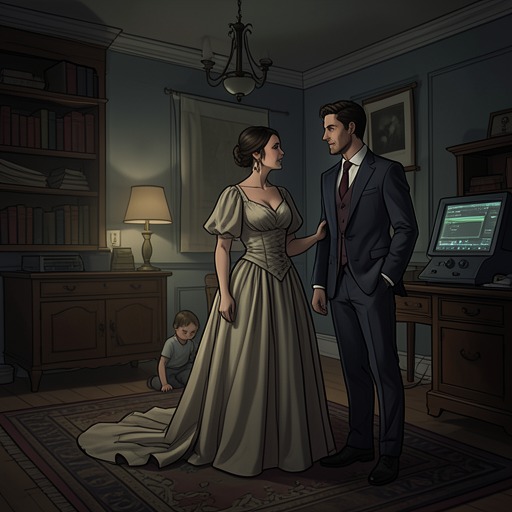
At Clare’s tea party, she tells Gertrude and Irene that she was frightened throughout her pregnancy with Margery Bellew because the child might be dark. She says she will not risk another pregnancy. Her fear is not presented as an abstract concern: it shapes a decision about whether to have more children, and it arises within her marriage to John Bellew, who believes his wife is white and rejects Black ancestry in his family.
Gertrude responds with recognition. She recalls being similarly afraid while pregnant, even though her husband and mother-in-law dismissed her concern as an idea brought on by her condition. She explains that, in her understanding, racial traits might reappear after skipping generations. She, too, decides against another child, including a daughter, because she fears that a child’s appearance could reveal ancestry others had not recognized. The exchange shows how the possibility of a dark-skinned child is treated as a family risk even when the adults around the pregnant woman deny that the risk is real.
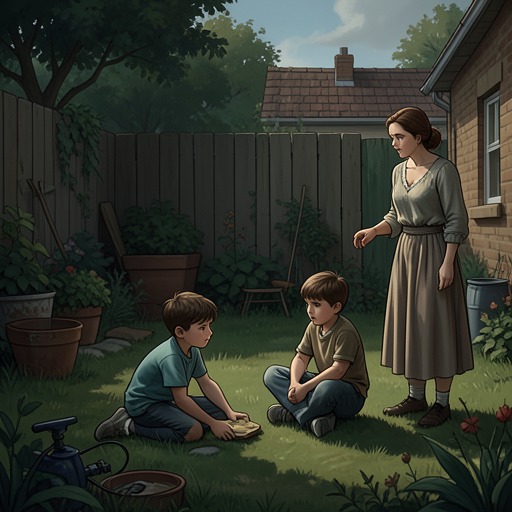
Irene interrupts this assumed agreement by saying that one of her sons is dark. Gertrude’s startled response exposes the gap between her abstract fears and the fact of a child in Irene’s family. Irene adds that her husband could not pass as white. Her even manner contrasts with her anger and contempt at being among people who take a dark child to be an alarming possibility. The moment does not erase her own investment in racial safety, but it makes visible the social judgment embedded in the other women’s fears.
Motherhood and the Stakes of Exposure
The concern returns when Irene tries to persuade Clare to avoid taking further risks with her concealed racial identity. Irene asks her to consider the consequences for Margery if John Bellew discovers the truth. She warns that Clare might lose her daughter and that, even if they remained together, the discovery would change their relationship; Margery might also learn about her ancestry too late to accept her mother’s concealment. These are Irene’s predictions, not outcomes the scene confirms. Their force comes from the vulnerability of a child whose security depends on what her father knows and how he responds.
Clare’s reaction registers the weight of Irene’s appeal. She is initially startled, then reflects on the cruelty and responsibility of motherhood. Irene recognizes in Clare’s words an understanding of the burden she herself feels, but uses that shared responsibility to argue against Clare’s return to the Black community. The scene therefore gives maternal care two connected meanings: genuine concern for a child’s safety and a means of urging a woman to remain within the limits imposed by racial secrecy. Clare’s fear of having another child and Irene’s warning about Margery both show how decisions about family life are constrained by a society that makes ancestry consequential.
Inheritance, Law, and Racial Classification
The novel’s explanatory notes place Clare and Gertrude’s fears within popular beliefs that ancestry might become visible in later generations. Such fears draw on the idea that racial identity is biologically fixed and can be read through the body. The one-drop rule reinforced that idea by treating even a small amount of Black ancestry as decisive, while Jim Crow laws institutionalized racial separation. These rules and beliefs made a child’s appearance seem capable of changing how a family was classified and treated, although the novel also questions the claim that race can be reliably identified by physical features.
The history of slavery and its aftermath helps explain why classification carries material consequences. The text’s critical discussion describes whiteness as a socially valued form of property, with legal and social privilege attached to being classified as white. The passing narrative tests the boundaries of that system: a person whose ancestry is not apparent can cross a color line that law and custom claim is stable. The tension between a supposedly decisive inherited identity and its uncertain visibility makes children’s bodies a focus of family anxiety without making the racial rules themselves natural or self-evident.
The Rhinelander miscegenation case further illustrates the stakes. The case involved a marriage in which a dispute over racial identity became a legal and public matter, demonstrating how courts could define ancestry and police marriage across the color line. The novel’s reference to the case links the tea-party conversation to a wider conflict over family, racial classification, and the privileges protected by white identity. Plessy v. Ferguson and the legal regime of separate but equal provide further context for the color line against which passing takes place.
Narrative Significance
By placing fears about children in ordinary conversation, Passing shows racial ideology operating inside domestic life rather than only in explicit law or public conflict. Clare and Gertrude’s decisions not to risk another pregnancy reveal the cost of treating a child’s possible appearance as a threat to family standing. Irene’s disclosure about her son unsettles their shared assumptions, while her later appeal to Margery shows that concern for a child can also become an argument for preserving secrecy.
The scene does not endorse the belief that ancestry produces predictable physical signs. Instead, it depicts that belief as socially powerful: it shapes reproductive choices, organizes family fears, and gives John Bellew’s possible discovery serious consequences in Irene’s account. In this way, the fear of dark skin connects intimate decisions to the broader racial order, while exposing how that order makes parenthood and a child’s place in a family contingent on classifications its own rules have constructed.